On-Site Report: YAMUNA BODY ROLLING® / YBR® Certification Training in Japan (English Program)
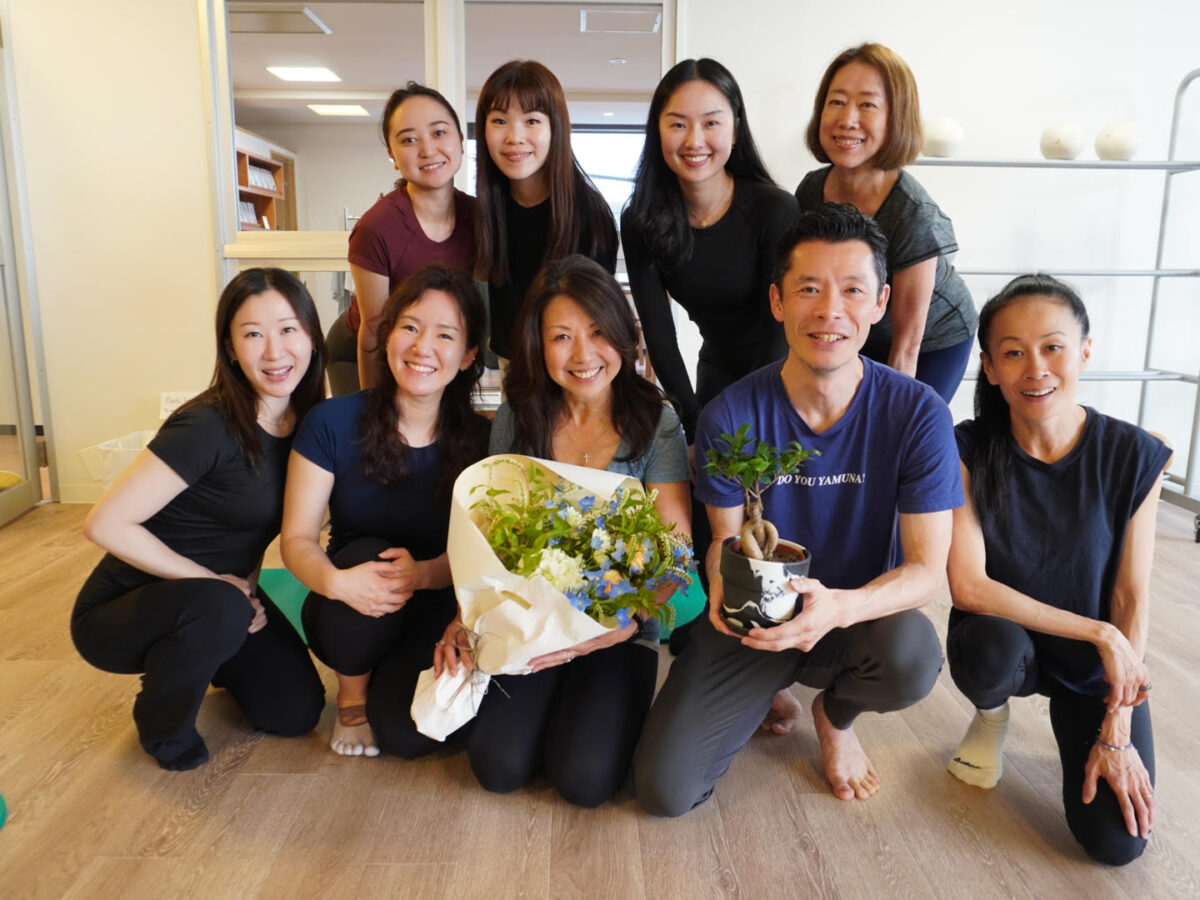


The YAMUNA BODY ROLLING® / YBR® Certification Training in Japan (English Program) was conducted over a total of ten days, with Part 1 taking place from April 23–27 and Part 2 from May 21–25.
We visited Yamuna Studio during Part 2 of the program. As the program had entered its final stage, participants were already demonstrating a strong understanding of the instructors’ guidance and were performing the routines smoothly and confidently.
During the anatomy lectures, it was particularly impressive to see the participants become increasingly engaged and energized as they deepened their understanding of both fundamental and advanced concepts. We spoke with YBR® Teacher Trainer Satoshi Suzuki about the program.
— It seems participants have come from various countries.
Satoshi: Yes. Many participants have traveled from Asian countries such as South Korea and Hong Kong. We also have a participant from the United Kingdom.
— How many participants are attending?
Satoshi: There are seven participants in total.
— What kinds of professionals are participating?
Satoshi: Many of them are Pilates instructors.
— Are there two instructors leading the training?
Satoshi: Yes. This was our first YBR® Certification Training conducted entirely in English. I co-taught the program with Mika Childs, who has extensive international teaching experience. We shared responsibilities throughout the training, each contributing our own strengths. Thanks to that collaboration, participants were able to deepen their learning in a warm, supportive, and enjoyable atmosphere throughout the program.
— Today is Day 8 and the training is nearing completion. How are the participants doing?
Satoshi: It has been quite different from our regular trainings at Yamuna Studio, in a very positive way. Having participants from different countries learning together creates a unique environment. During practical exercises and teaching sessions, participants work in pairs and observe each other’s movements. By sharing insights and offering feedback, meaningful interactions naturally occur, creating a very positive learning atmosphere.
— Is the curriculum the same as the YBR® Certification Training conducted in Japanese?
Satoshi: Yes, the content is exactly the same.
— The curriculum appears to cover a wide range of subjects. Could you explain the core components of the training?
Satoshi: The training focuses on four primary areas:
- Anatomy
- Learning the Routines
- Hands-On Skills
- Teaching Skills
Anatomy
To understand and teach the Yamuna Method, a solid foundation in anatomy is essential. By learning how the human body is structured—particularly the bones, tendons, and muscles—participants gain a clear understanding of why the Yamuna Method is logical and effective.
Because students experience the work directly on their own bodies while learning anatomy, it can be described as “experiential anatomy.” This approach provides a deeper level of understanding and body awareness than studying anatomy through textbooks alone.
Learning the Routines
In YBR®, the ball rarely stays in one place. As the body moves, the points of contact between the body and the ball continuously change.
Each routine follows a specific sequence, and that sequence is extremely important. Participants must also learn how to coordinate their movement with their breathing. During the training, students thoroughly learn and memorise these step-by-step processes.
Hands-On Skills
Once the YBR® movements are learned, they can be practiced independently. However, there are situations where a practitioner can significantly enhance the effectiveness of the work by providing appropriate hands-on support and guidance.
Participants learn when and how to apply hands-on techniques safely and effectively to help clients achieve optimal results.
Teaching Skills
Being able to perform YBR® correctly is essential, but becoming a certified practitioner also requires the ability to teach others.
To help students understand the work, practitioners must communicate clearly and accurately. They must also consider how to demonstrate movements effectively, including positioning themselves so that students can clearly see the ball placement and movement patterns from various angles.
Throughout the training, participants develop both the knowledge and practical skills necessary to teach YBR® confidently and effectively.
— It sounds like there is a tremendous amount to learn and master.
Satoshi: Yes, there is. That is why we have carefully designed the curriculum. Participants receive six hours of instruction per day, for a total of sixty hours of training.
Our goal is not only to teach the material but also to provide sufficient time for students to absorb the information through repetition and hands-on experience. We believe that true learning occurs when the knowledge becomes integrated into both the mind and the body.
Participant Interviews
HyunJu (South Korea)
“I first experienced the Yamuna Method three years ago with Mika Childs in Tokyo.
At the time, I was suffering from pain in my right hip. I had tried stretching and various other approaches, but nothing seemed to help. However, after doing Yamuna work, the pain disappeared. It was simply fantastic!
I own a Pilates studio in Seoul. Pilates is excellent for strengthening the body’s core, but when clients are dealing with pain, it can be difficult to eliminate that pain through Pilates alone.
The reason I decided to enroll this certification training is that I wanted to use Yamuna to help people who are living with pain.
Korean society can be a very stressful environment. By becoming a certified Yamuna practitioner, I hope to help release tension and improve the quality of life for as many people as possible.”
Tereza (United Kingdom)
“I first experienced the Yamuna Method in 2018 while living in Hong Kong.
At the time, I was pregnant with twins and suffering from pain throughout my body. Some days, the discomfort was so severe that I could barely do anything except lie down.
A Pilates instructor recommended Yamuna to me. I decided to try it and was deeply impressed. Not only was my pain reduced, but I could actually feel areas of my body that had become tight and restricted beginning to release.
Later, I moved to Cornwall in the south of England. There were two reasons I decided to attend the YBR® Certification Training.
The first was that I wanted to change my life. I own a commercial film production company, which means I spend long hours in front of a computer and live with constant stress. I felt that becoming certified in Yamuna could bring a very positive change to my daily life.
The second reason relates to the community where I live. Unlike large cities, many people in my town are retired and enjoy a slower pace of life. Health is one of their highest priorities.
There are also many retirement homes in the area. After becoming certified, I hope to volunteer and share Yamuna with residents who may benefit from it.”
Amber (Hong Kong)
“I first experienced the Yamuna Method three years ago with Kazuyo Teramoto Forrer when I attended her Yamuna class in Hong Kong.
At the time, I was working as a Pilates instructor and had developed lower back pain while teaching. I tried stretching and various other methods, but the pain would not go away.
Although I knew very little about Yamuna, I attended Kazuyo’s class without many expectations. The experience was truly eye-opening.
Every area where the ball applied pressure felt exactly right. I could immediately feel that it was working, and my pain began to subside.
Afterward, I noticed that whenever I practiced Yamuna before doing Pilates, my body felt more balanced and my movements became smoother. I was genuinely impressed.
After completing this training and becoming certified, I hope to integrate Yamuna with Pilates and offer both methods to my students.
If I were to compare them to a tree, Pilates creates the strong trunk that remains stable even in powerful winds. Yamuna, on the other hand, gives the tree the ability to move, respond, and sway gracefully with the wind. Together, they create both strength and freedom of movement.”
「ヤムナボディローリング/YBR資格トレーニング in JAPAN(英語講習)」現場レポート。
「ヤムナボディローリング/YBR資格トレーニング in JAPAN(英語講習)」は、Part1(4/23〜27)、Part2(5/21〜25)の計10日間の日程で行われました。今回はPart2講習中のヤムナスタジオを訪問。トレーニングも終盤に入っており、受講生たちは講師の指示する動きを的確に理解し、スムーズにワークを行っていました。
また解剖学の講義では、基礎から専門的な内容まで、一つひとつ理解が深まるたびに受講生の表情が生き生きとしていくのが印象的でした。ヤムナ資格トレーニングティーチャーの鈴木智さんに話を伺いました。
――さまざまな国から来日されているようですが?
鈴木:韓国、香港など、アジアの国々から受講にいらしている方が多いです。遠い国では、イギリスからの方もいます
――何人の方が受講していますか?
鈴木:全部で7人です。
――どんな方が参加しているのでしょうか?
鈴木:ピラティスのインストラクターの方が多いです。
――今回、講師は2名体制ですか?
鈴木:今回は初の英語での開催でしたが、海外での指導実績が豊富なチャイルズ美佳さんと共同講師として進行を分担し、それぞれの強みを活かしながらトレーニングを進めました。そのおかげもあり、終始温かく楽しい雰囲気の中で学びを深めることができました。
――今日は8日目で終盤ですが、みなさんの様子はいかがですか?
鈴木:普段のヤムナスタジオでのトレーニングと違って、国籍の違う方が集まってのトレーニングはとても興味深いですね。ワークの実践やティーチングなどで、ペアを組んでお互いの動きをチェックする時間もあるので、気づきやアドバイスを伝えることで交流があり、とても良い空気が生まれています。
――内容としては、日本語で行われている「YBR資格トレーニング」と同じものになるのですしょうか?
鈴木:はい、すべて同じ内容です。
――講義項目は多岐に渡ると思います。改めて中心となる内容について教えていただけますか?
鈴木:トレーニングの中心となるテーマは次の4つになります。
- 解剖学
- ルーティンの習得
- ハンズオンの習得
- ティーチングの習得
ひとつずつ概要を説明します。
解剖学
ヤムナメソッドを理解し教えるためには、解剖学の知識が必要です。人間の身体、特に骨格、腱、筋肉がどのように構成されているかを知ることにより、ヤムナのワークが合理的であり、効果を生む理由が分かるようになります。実際にボールに乗り、自分の身体を使って覚えていく「体験型解剖学」とも言えるので、より深い理解と感覚を得られると思います。
ルーティンの習得
YBRのワークはボールが1ヶ所に留まるものではなく、身体を動かすことにより、ボールと身体が接触する部位が移動していくことがほとんどです。決まった順番があり、それがとても重要になります。同時に、動きと呼吸を合わせることも必要になります。それら一連の手順をしっかり頭の中に入れていただきます。
ハンズオンの習得
YBRは動きを覚えてしまえば自分一人で実践できるものですが、教える人が手を添えてサポート、正しく負荷を加えると、より高い効果が期待できる方法があります。そのためのハンズオンの知識と方法を習得してもらいます。
ティーチングの習得
YBRの動きを覚えて、自分で正しく実践できることは必須のことですが、資格トレーニングでは、それを人に教えることが必要になります。相手に理解してもらうためには、的確で分かりやすい説明をしなければなりません。動きのお手本を見せる時に、ボールの位置が見えやすくするために、相手にどの角度から見てもらうのが良いのかも考える必要があります。一連のティーチングについての知識、実践を習得してもらいます。
――すべてのことを理解、習得するのは、かなり大変そうですが?
鈴木:綿密にカリキュラムを組んでいます。1日6時間、合計60時間、丁寧に教えていきます。しっかり学習をしていただき、繰り返し自分の頭と身体の中に吸収してもらうことが重要だと考えています。
<受講されている方に、「ヤムナとの出会い」「資格トレーニング受講のきっかけ」「資格取得後の計画」などについて話を聞きました>
ヒュンジュ/HyunJuさん(韓国)
「ヤムナに出会ったのは3年前です。東京でチャイルズ美佳さんのクラスを初めて体験しました。当時右股関節に痛みがあり、ストレッチなどでは治らず悩んでいました。しかし、ヤムナのワークを行なったら痛みがなくなリました。それはもう、ファンタスティック! の一言です。私はソウルでピラティスのジムを経営しています。ピラティスは身体のコアを強くすることはできるのですが、痛みを持っている人の場合、ピラティスで消すことはなかなか難しいです。
今回、受講しようと思ったのは、痛みを持っている人のためにヤムナを活用したいと思ったからです。韓国社会はとてもストレスが多い環境にあります。ヤムナの資格を取得して一人でも多くの人の緊張を解放したいと考えています」
テレッサ/Terezaさん(イギリス)
「2018年にヤムナメソッドを初めて体験しました。当時、香港に住んでいました。私は双子を妊娠していて、身体のあちこちが痛くて苦しんでいました。ひどい時は横になっていなければいけないくらいでした。そんな時、ピラティスの先生からヤムナを薦められたのです。受けてみて、とても感動しました。痛みが緩和されるとともに、固まってしまった場所がゆるめられるのを実感しました。その後、イギリス南部のコーンウェルに移住したのですが、今回、2つの理由で、YBR資格トレーニングを受けようと決心しました。
一つ目は、人生を変えたいと思ったからです。私はコマーシャル映像制作の会社を経営しています。常にコンピュータの前にいて、ストレスフルな毎日を送っています。ヤムナの資格を取得すると、生活の中にとてもいい変化が生まれると思いました。
二つ目は、私の住んでいる街の人は、都会人とは違って、リタイアして穏やかに暮らしている人が多いのです。彼らが、まず第一に大切にすることは健康です。老人ホームが多くあるので、ヤムナの資格を取得したら、ボランティアとしてホームの人たちの役に立てればと考えています」
アンバー/Amberさん(香港)
「3年前に初めてヤムナメソッドを体験しました。私は、香港でピラティスのインストラクターをしています。私が仕事をしているスタジオには、ヤムナのクラスがあります。当時、ピラティスを教えている時に腰痛になりました。ストレッチなどで調整しようとしたのですが、痛みは消えなくて困っていたのです。ヤムナについての知識はなく、半信半疑で、あまり期待しないで寺本フォラー和代さんのヤムナセッションを受けに行きました。衝撃を受けました。ボールによって圧がかけられた場所には、ことごとく『効く』感覚がありました。そして痛みが治まりました。
その後、ヤムナを実践してからピラティスを行うと、身体のバランスが良くなり、動きもスムーズになることが分かりました。本当に感動しました。今回の受講後、ヤムナの資格を取得して、ピラティスとヤムナを融合して生徒さんに教えてあげたいと思います。木に例えるなら、ピラティスは、強い風が吹いてもどっしりと耐える幹を作ってくれるもの。ヤムナは、強い風が吹いても、その風に呼応して、しなやかに左右にスイングするような躍動感を与えてくれるものだと思います」
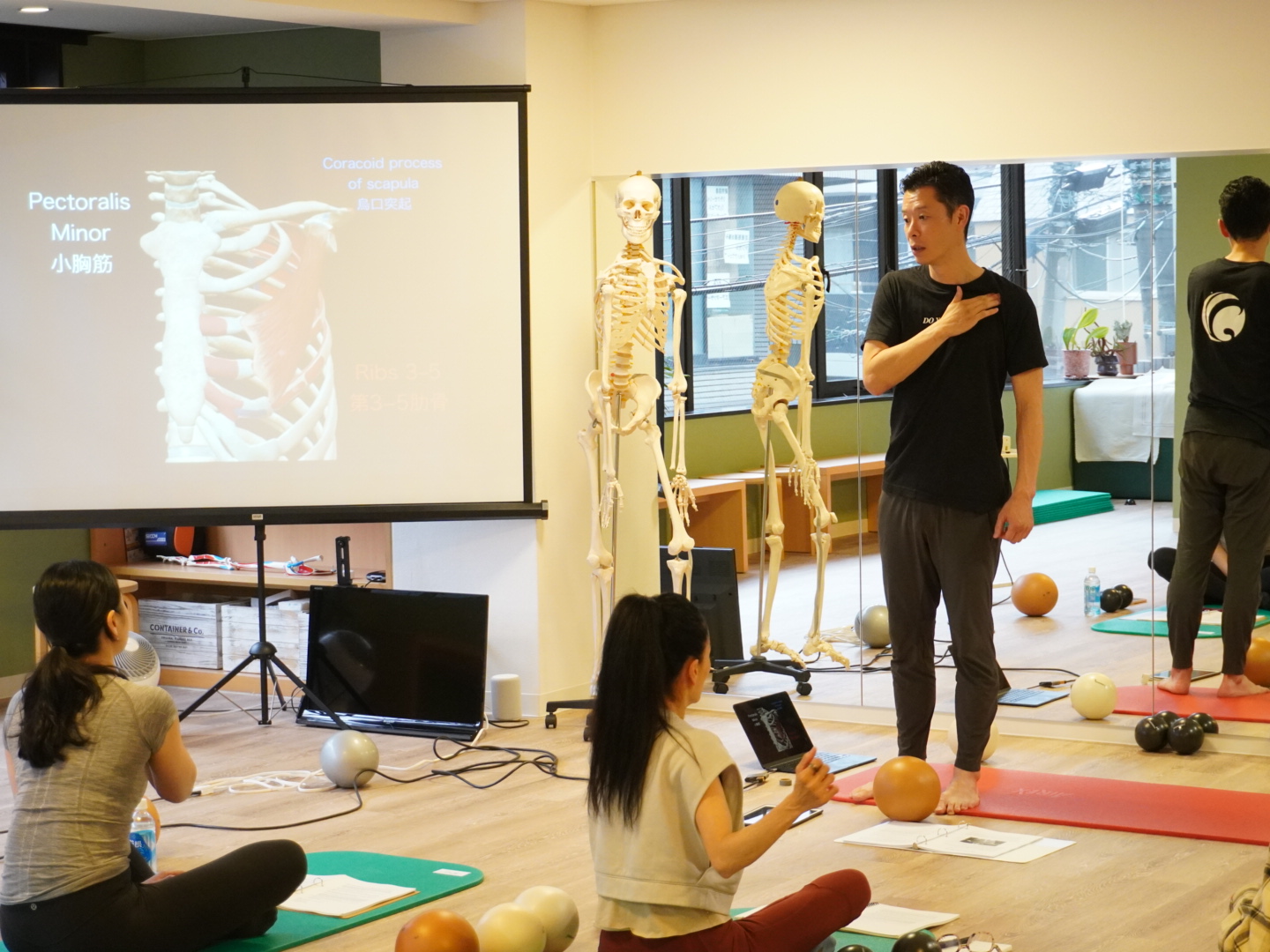
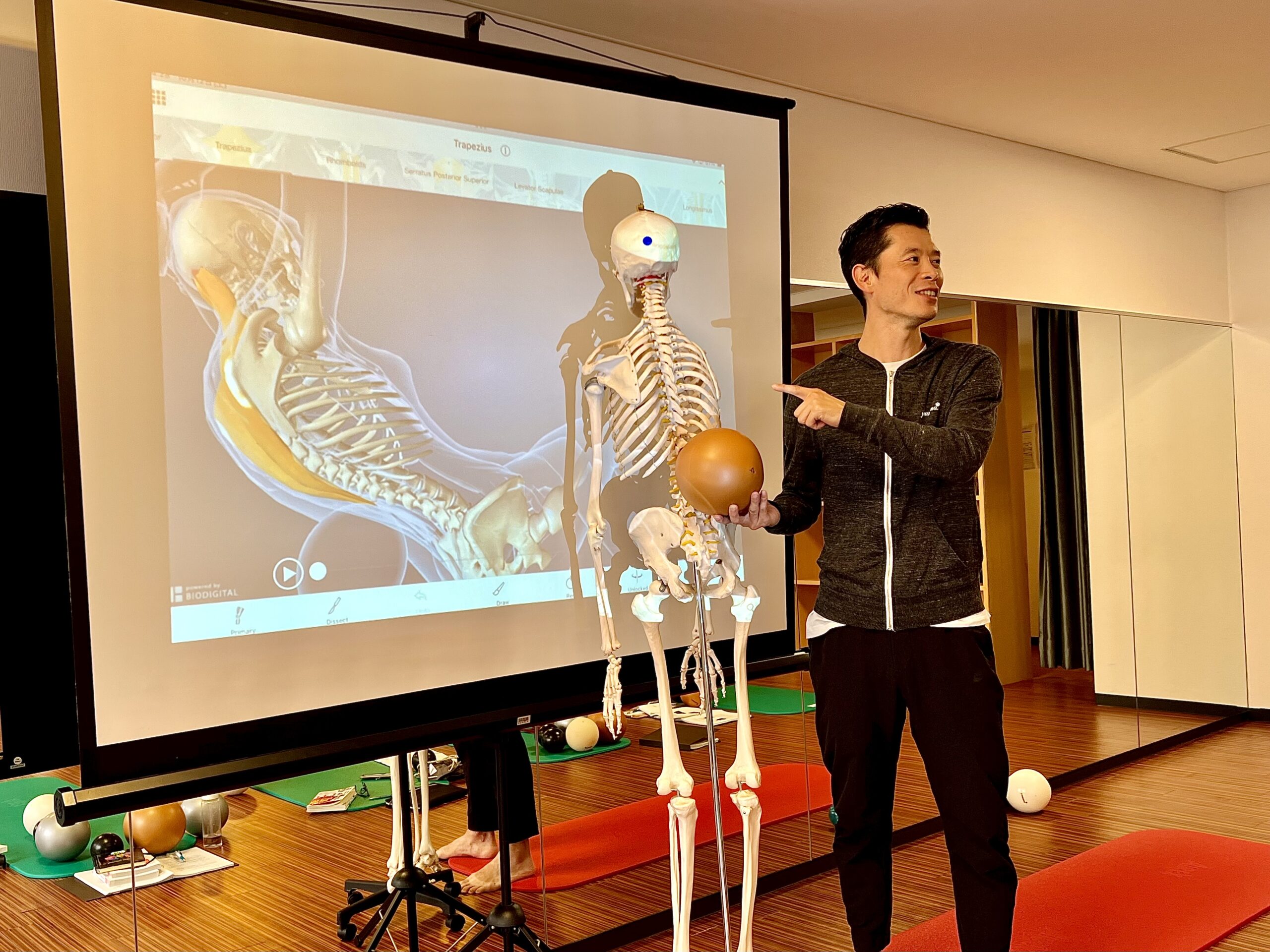
体験的解剖学「Anatomy U」の画像を用い、骨や筋肉の配置・構造を理解しながら、正しいボールの動きを学ぶ。画像と同じ動きを実践し、その時に感じる感覚を認識・記憶することは、ティーチングにおいて重要な要素となる。
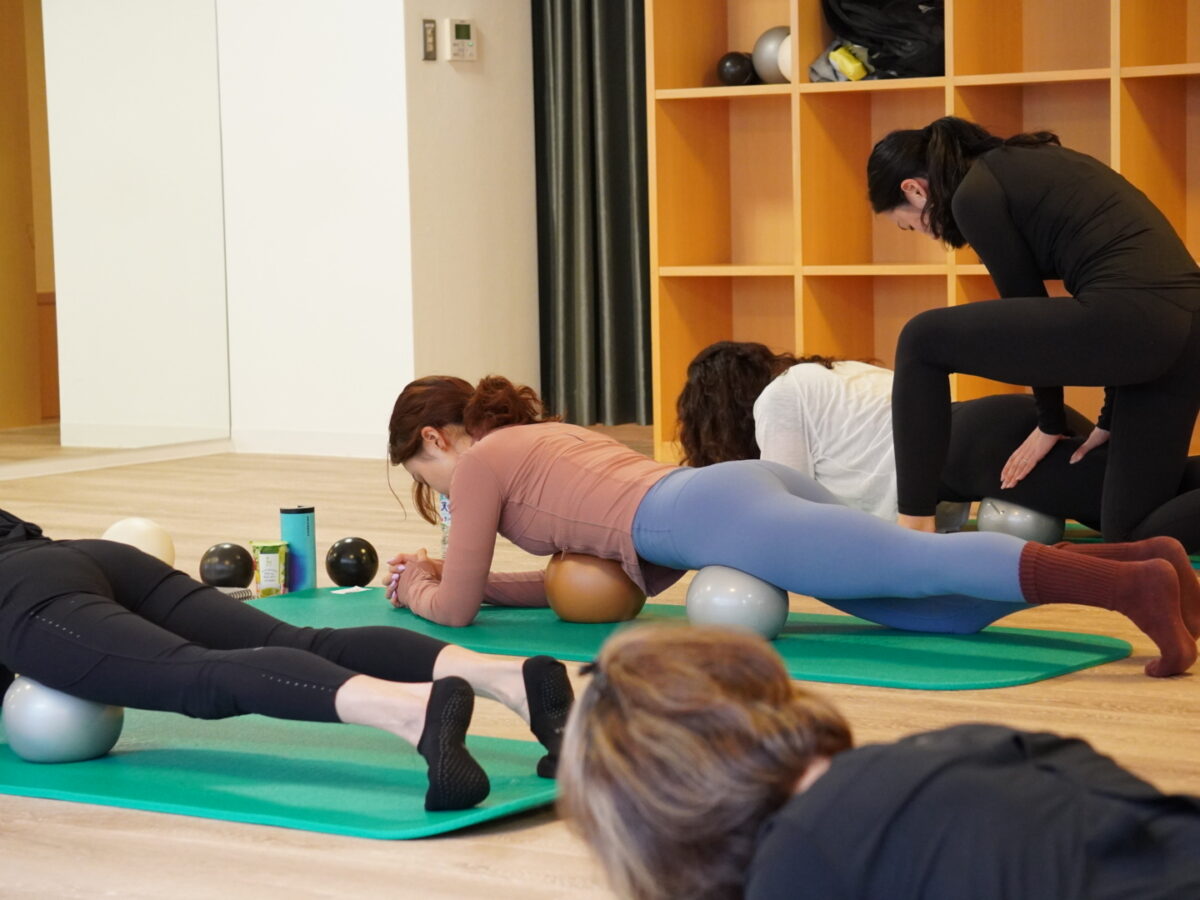
ゴールドボール、パールボール、ブラックボール、それぞれの大きさ、特性、効果などを実践体験することで、ヤムナメソッドへの理解はより深まる。さまざまな部位で実践することにより、骨をターゲットにする感覚、筋肉にアプローチする感覚、どちらも研ぎ澄まされていく。
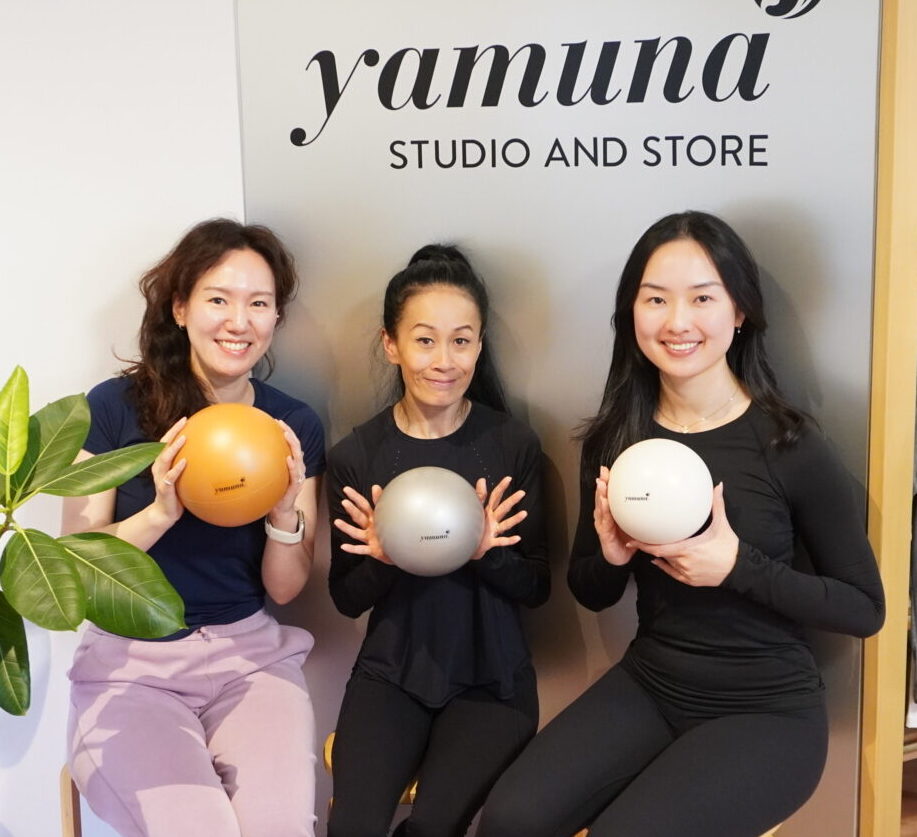
As they shared their personal experiences and sensations while practicing the Yamuna Method, participants discovered new perspectives and insights through one another’s stories.
左からヒュンジュ/HyunJuさん(韓国)、テレッサ/Terezaさん(イギリス)、アンバー/Amberさん(香港)。各々がヤムナメソッドを実践した時の感覚を語るのを聞いて、また新たな発見をした様子でした。